


A shade can soften the visible source, but useful light still depends on where the opening, table, seat, and viewer meet.
Explore Finishes · Glare & Comfort Study
Soft Diffusion: Shade Coverage, Glare, and Useful Light
The quietest-looking fixture is not automatically the most comfortable—or the most useful. Read the source, shade, sightline, and task together.
Choose soft-diffused lighting when the source would otherwise sit in a frequent line of sight. Then protect the task: confirm the shade opening, source position, published output, and the extra light layers the room still needs.
Soft diffusion is often treated as a mood word. In a real room, it is a relationship between the light source, the material around it, the openings left uncovered, the viewer’s angle, and the surface that needs light. Change any one of those conditions and the experience changes. A frosted globe can obscure a direct view of the bulb from the side, yet still feel bright against a dark evening background. A shaded pendant can appear calm at eye level while sending stronger light down to a table. A glowing wall light can support orientation without replacing a reading lamp.
This is why “soft” should not be used as proof of low glare, measured brightness, visual comfort, or task performance. Lighting researchers evaluate discomfort in context: source luminance and apparent size, position in the field of view, and the viewer’s adaptation to the surrounding brightness all matter. Product photography is useful for shape and placement, but it cannot tell us the luminance at your eye, the illuminance on your book, or whether a chosen source and control will suit the room.
The practical decision is not “diffused or bright.” It is where the room should hide the source, where it should release light, and which activities require a separate layer. That distinction also keeps this guide separate from our glass study: glass categories explain transparency, texture, bulb visibility, and maintenance. Here, frosted glass appears only as a verified example of shade coverage and source shielding.
01 · Glare path
Follow the light from source to shade to eye
A fixture can look uniformly luminous in a room photograph while still presenting very different views from standing and seated positions. Trace three checkpoints before using words such as soft, shielded, or comfortable.
Locate the source
Is the lamp replaceable or integrated? Is it centered inside a globe, behind a panel, above an open lower edge, or visible through an opening? Record the current product specification instead of guessing from the glow.
Map the shade
Note what blocks a direct view from the side, what remains open above or below, and whether several shades overlap. Frosted glass, fabric, acrylic, and other diffusers are not interchangeable materials even when their photographs look equally quiet.
Test the viewer
Check the doorway, sofa, dining chair, pillow, desk chair, and stair approach. A source near the center of vision can be more noticeable than the same source outside the usual sightline. Dark surroundings can also make a bright opening feel more pronounced.
02 · Shade coverage
Four structures can make four different promises
Look beyond the finish name. The most useful distinction is what the structure does from the angle you occupy. These are reading categories, not performance ratings; one fixture may combine more than one.
Exposed source
The lamp or LED surface remains visible from common angles. This can create sparkle and definition, but direct-view sensitivity should be tested carefully—especially against a dark room at night.
Partial shielding
A cap, rim, panel, or shade blocks selected angles while leaving others open. This can preserve downward or upward light, yet comfort changes when the viewer moves above or below the shield line.
Enclosed diffuser
A globe or enclosed shade surrounds the source. The luminous area may look broader and the lamp less distinct, but material, thickness, source position, and background still affect perceived brightness.
Downward task opening
The shade hides the source laterally while releasing more light toward a table or work surface. It can support task lighting, but the opening should not sit at a height that exposes the source to seated eyes.


03 · Comfort matrix
Match the light path to the activity
| Room / activity | Most sensitive sightline | Useful diffusion move | Trade-off to check | Support layer |
|---|---|---|---|---|
| Dining table | Seated view across the table and the approach from the room. | Shield direct lateral view while allowing useful light toward the tabletop. | A glowing shade may feel calm but still provide insufficient table light, or an open underside may reveal the source when hung too high. | Perimeter or wall light for faces, circulation, and room depth. |
| Bedroom / bedside | Low eye position from the pillow and seated edge of the bed. | Place the source behind or above the usual line of sight; choose local control. | A decorative wall glow does not prove enough light for reading, and a high-output source may feel conspicuous in a dark room. | Dedicated reading light or a controlled bedside layer. |
| Reading corner | Book, page, and source can fall within a narrow visual field. | Use shielding that keeps the lamp out of the eye while directing light toward the page. | Heavy diffusion may reduce perceived punch on the task even if the fixture itself looks luminous. | Adjustable floor or table lamp positioned for the reader. |
| Open living space | Several moving views: sofa, circulation path, dining zone, and entry. | Use more than one lower-intensity visual layer instead of one dominant point. | Too many equally bright diffusers flatten hierarchy; one bright centerpiece can still dominate the dark field. | Ambient, accent, and task circuits with separate control where compatible. |
04 · Day-to-evening sequence
A soft-looking fixture has three lives

Read the unlit material
In daylight, judge silhouette, scale, shade color, surface consistency, frame contrast, and whether the fixture contributes enough form when it is not glowing.

Watch edges and overlap
Once lit, each panel or globe becomes part of a larger brightness pattern. Check bright seams, gaps, lower openings, reflections, and the seated view—not only the overall atmosphere.
Reduce contrast, not usefulness
When the room beyond the fixture goes completely dark, any luminous surface can feel stronger. A controlled wall, table, or accent layer can lower the contrast while preserving the activity light you need.
05 · Useful-light ledger
Diffusion does not settle the brightness question
People often ask whether a shade will make the room too dim. The answer cannot come from the material name alone. A more reliable review separates four different jobs.
Confirm source type, number of lights, wattage or published output where available, color temperature, replaceability, and compatible control for the exact selected variant.
Identify which directions are shaded, open, reflected, or blocked. A fixture can look bright while placing little light on the task, or look restrained while sending useful light downward.
Ceiling height, wall and ceiling reflectance, dark finishes, daylight, furniture, and the background behind the fixture change perceived contrast. Photos from another room cannot resolve yours.
Assign ambient, task, accent, and circulation roles. Do not make one decorative chandelier responsible for every function simply because its shade appears broadly luminous.
06 · Before ordering
Six checks turn “soft” into a usable specification
Confirm the shade material
Use the exact current DETAILS field. Do not call synthetic, glass, acrylic, or unspecified shades silk, linen, fabric, or natural material without product-level verification.
Request lit and unlit views
Look for clean product views, room views, and the source through every opening. Ask which color temperature and control setting appear in a reference image when the answer matters.
Draw the seated sightline
Mark eye height, fixture bottom, source position, and the lower shade edge. Repeat from both sides of a table, the sofa, pillow, or reading chair.
Protect the task
List what happens beneath the fixture: dining, reading, preparation, conversation, or circulation. Ask for published output or photometric information when available and plan a second layer where needed.
Verify control and service
Confirm dimming only for the exact lamp, driver, dimmer, and variant. Also verify replacement access, approved bulb type, and how an enclosed shade is removed and cleaned.
Review size and installation
Check dimensions, drop, ceiling condition, junction box, support, access, wiring, and local code with a qualified professional. Use the WREA Size & Installation Guide as a planning start.
Verified WREA application studies
Three shade arrangements, three different room roles
These are not glare ratings. They are ways to read currently verifiable WREA structures and specifications. All three product pages list a Copper frame, Glass shade, a replaceable LED source, included bulb, warm-light 3000K option, and dry-cloth care after power is turned off. Recheck the page before ordering.
Application 01 · distributed dining centerpiece
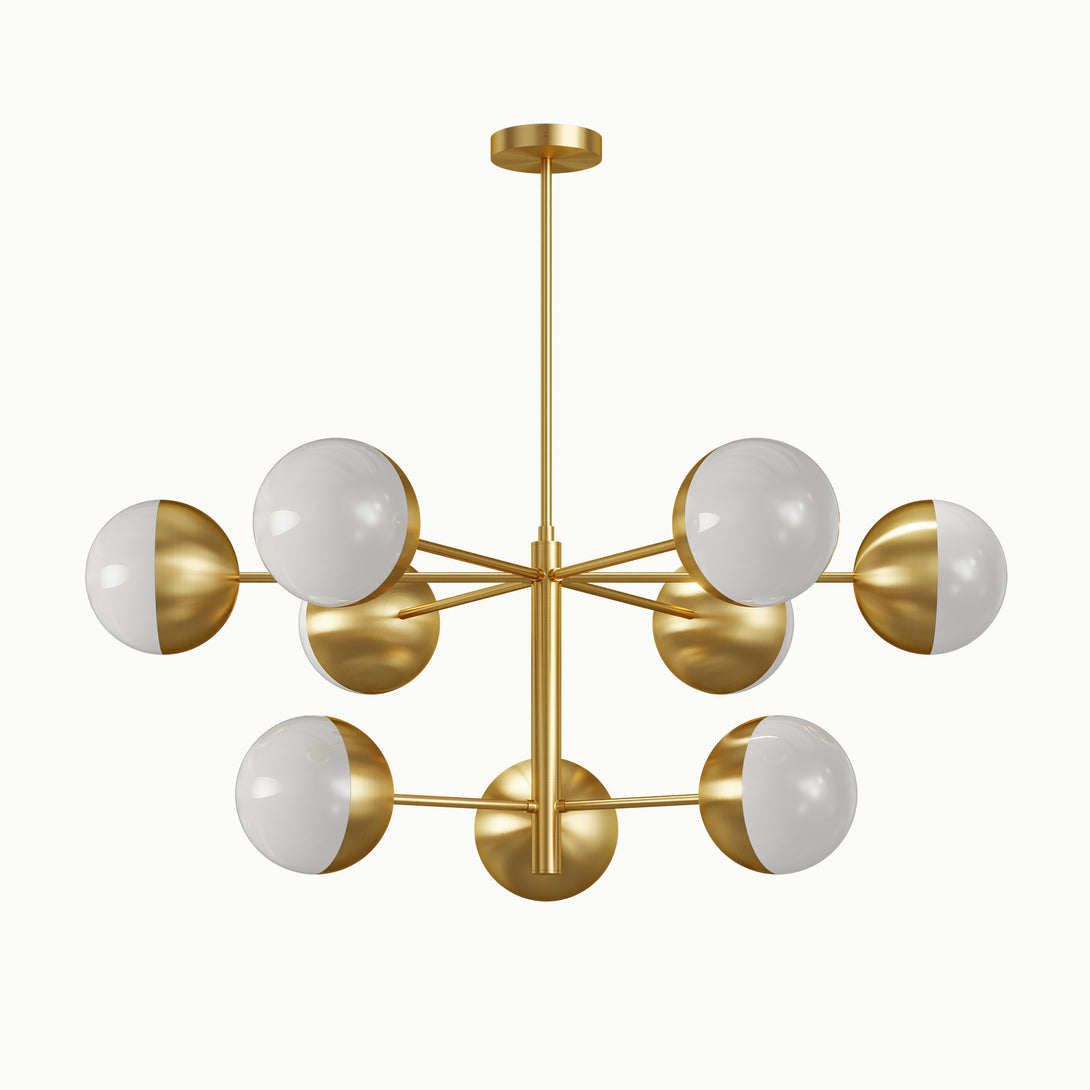
Brass Magic Bean Spherical Frosted Glass Double-Tier Chandelier
Nine frosted spherical glass shades spread across a branching, double-tier silhouette. The enclosed-looking globes can be evaluated for lateral source coverage, while the broad composition should be checked from every dining seat and against the table’s width.
Current DETAILS identify Glass shades and Copper frame; colors are Copper, Nickel, and Black. The photograph does not establish measured distribution, dimming compatibility, or table illuminance.
Review current product details →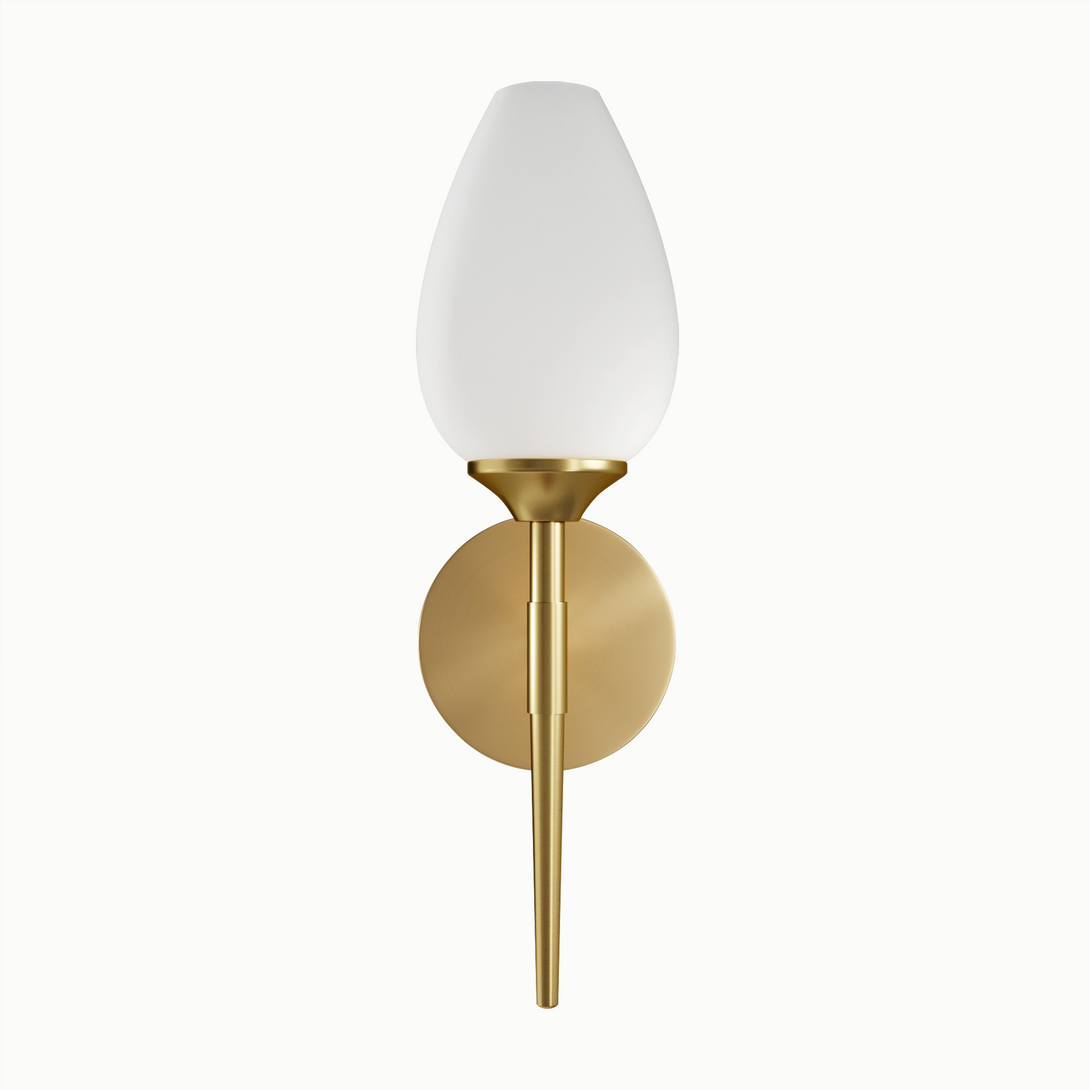
Application 02 · low-level wall layer
Brass Floral Frosted Glass Interior Wall Sconce
A single frosted glass shade places one source close to the wall. It can be considered as an ambient or circulation layer, or used in a pair for visual balance. Mounting position matters: test the shade against standing, seated, and bedside eye levels rather than assuming every placement feels the same.
Current DETAILS identify Glass shade, Copper frame, and Copper, Nickel, and Black colors. Treat reading performance, reflected wall effect, and control compatibility as questions for the exact project.
Review current product details →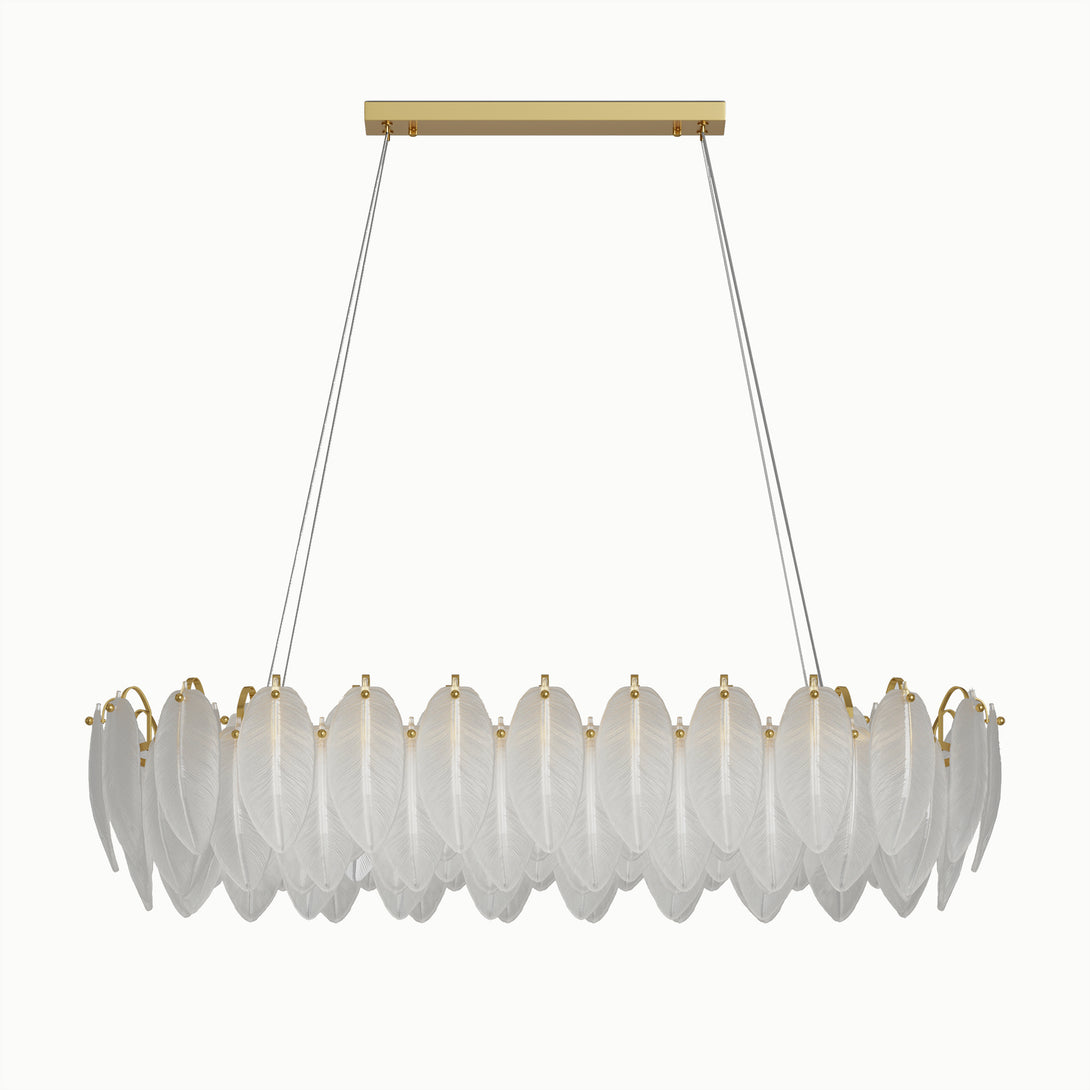
Application 03 · layered linear field
French Rectangular Frosted Leaf Glass Feather Chandelier
Ten sources sit within a long composition of overlapping leaf-shaped glass elements. The layers create many edges and partial views, so study the fixture from the long and short sides of the table. The current title uses “Frosted Leaf Glass”; the current DETAILS material is simply Glass.
Current DETAILS list Copper, Nickel, and Black color options. This guide does not repeat unverified crystal, solid-brass, heat-resistance, durability, or uniform-diffusion claims from promotional copy.
Review current product details →Soft diffusion FAQ
Five questions to ask before the room gets dark
Does frosted glass eliminate glare?
No. Frosted glass can obscure the source and broaden its visible luminous surface, but glare depends on source brightness and size, viewing angle, background brightness, shade construction, and adaptation. Review the exact fixture from the positions you will occupy.
Will a soft-diffused light make my room too dim?
Not necessarily, and the material name alone cannot answer. Check source type, number of lamps, published output when available, openings and distribution, room surfaces, mounting position, and other layers. A luminous fixture is not proof of adequate task light.
Is an opal or frosted shade better than an exposed bulb over a dining table?
It may be more suitable when diners would otherwise see the source directly, but “better” depends on the table task, mounting height, shade opening, source and control. Compare the seated sightline from both sides and retain enough useful light on the tabletop.
What kind of light is best beside a bed or reading chair?
Prioritize shielding from the low seated or reclined eye position, local control, and light directed toward the page or task. A decorative diffuse wall glow can support the room, but it should not automatically replace a dedicated reading layer.
Can I assume a silk-like shade is real silk?
No. “Silk-like” describes appearance unless the exact product documentation identifies silk as the material. Confirm whether the shade is fabric, synthetic textile, glass, acrylic, paper, resin, or another material, and follow the product-specific care instructions.
Source + sightline + task
Send the view from the chair, not only the view from the doorway
Share the exact product link and variant, room dimensions, ceiling height, table or bed position, eye-level photographs, finish palette, desired activities, and any dimming requirement. WREA can help identify what the current page verifies and which comfort or performance questions still need review.


