


Should bedside wall sconces be centered over the nightstand, aligned with the pillow, or positioned from the bed itself? The most reliable answer is to begin with the person using the light, then make the pair read as part of the bed wall.
A nightstand center is a useful visual reference only when the furniture is permanent, proportionate, and placed where the reader actually needs light. If the two nightstands differ in width—or the bed is not perfectly centered on the wall—blindly centering each sconce over each table can make the pair look unrelated.
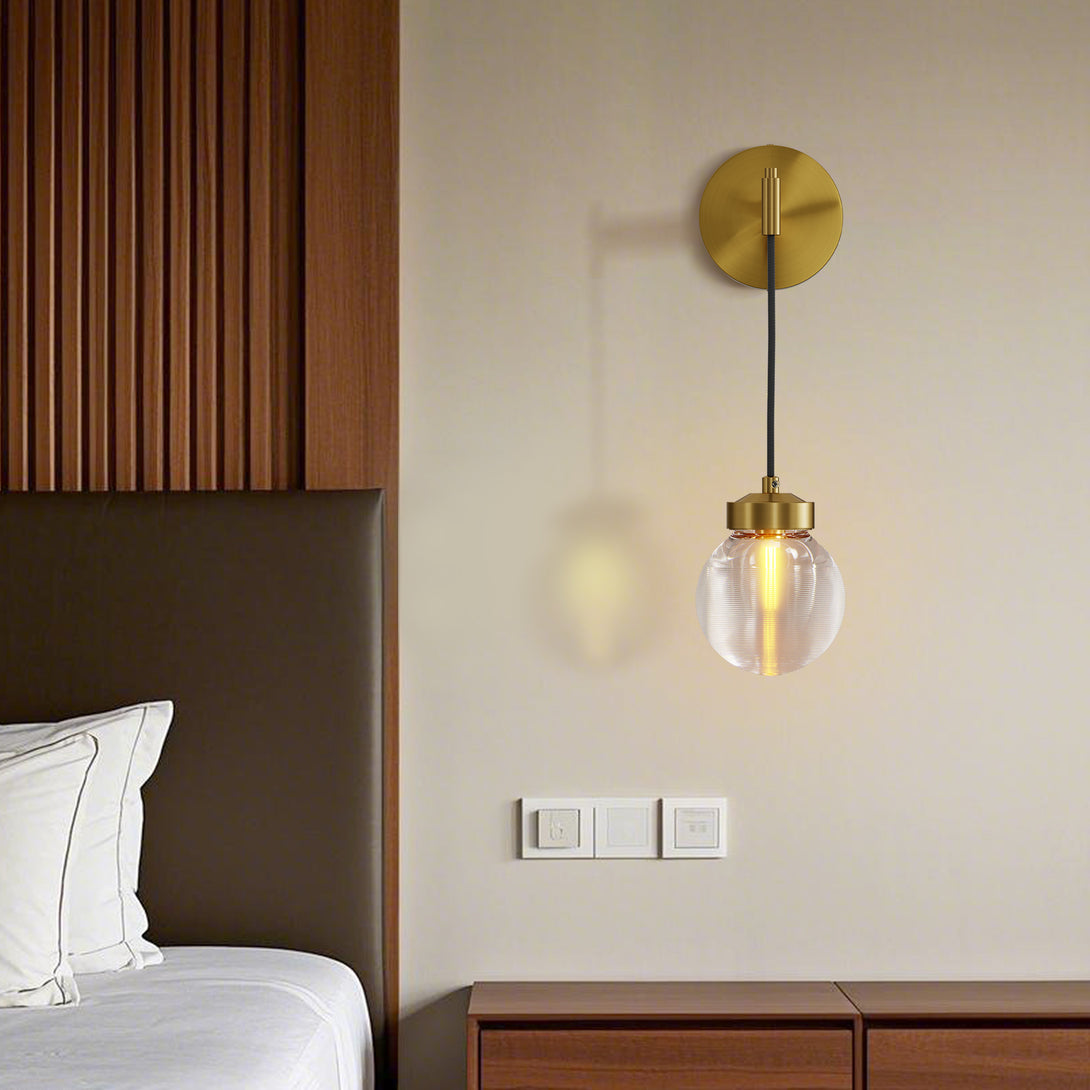
Align the light to the reader first, then balance it against the bed.
Mark the bed centerline, each seated reading position, the headboard edges, and both nightstand centers. The final sconce centers should work as a pair while keeping the light source comfortable for the people in bed.
There Are Three Possible Centers on Each Side
“Center the sconce” is incomplete advice. Before wiring is placed, identify which object or activity is being centered.
Nightstand center
Creates a tidy furniture composition when both tables are similar and their positions are unlikely to change.
Reading position
Uses the actual seated shoulder, eye, and page position. This matters most for a task-oriented bedside light.
Bed and headboard
Creates a matched pair around the bed centerline, especially when the wall or furniture is not symmetrical.
First protect the reader from glare and awkward reach. Second make the two fixtures relate to the bed. Third refine their relationship to the nightstands and surrounding wall.
Map the Whole Bed Wall Before Choosing a Height
A front elevation reveals conflicts that a single floor measurement cannot. Draw the full bed wall, including windows, art, outlets, switches, trim, and both sides of the furniture.
Mark the bed envelope
Record mattress width, headboard width and height, pillow area, and the gap between the bed and each side wall.
Mark the movable furniture
Measure each nightstand separately and note whether it may be replaced, widened, or repositioned later.
Mark the fixed wall conditions
Record windows, molding, outlets, switches, studs when professionally verified, and visible electrical points.
Start with the Seated Reader, Not an Internet Number
Current bedside guidance often places the light source near seated eye level or about 20–24 inches above the top of the mattress as an initial reference. Those numbers can help you create a mockup, but mattress height, headboard height, pillow depth, user height, fixture shape, and shade direction can move the final position.
Look toward the fixture from the pillow.
The bulb or brightest opening should not sit directly in the natural reclined sightline. A clear globe, exposed bulb, downward shade, and diffused glass can require different vertical positions even when their backplates are the same height.
Measure to a clearly named point: backplate center, shade center, light-source center, fixture top, or fixture bottom. “Mount at 60 inches” is not useful unless everyone knows which point reaches 60 inches.
Record Six Measurements Before Electrical Placement
What If the Nightstands Are Different Widths?
Do not create two unrelated electrical centers just to hit the middle of two different tables. Decide whether the asymmetry is temporary furniture or an intentional architectural composition.
Keep the sconces tied to the bed
If one nightstand may be replaced, create a balanced pair from the bed centerline and reading positions. Let the furniture below remain slightly asymmetric rather than building that temporary mismatch into the wall.
Use separate visual zones
If one side includes a desk, window, built-in cabinet, or different sleeping function, matching coordinates may not be the correct goal. Document the reason for each position and test both from the room entrance.
Matching sconces do not always require mathematically identical distances from the side walls. What matters is that their relationship to the bed and users looks deliberate from the main viewing direction.
Projection Can Matter More Than Height
A wall sconce may be vertically correct and still be uncomfortable because the shade, arm, or globe projects too far from the wall. Record the complete projection to the outermost glass, not only the backplate depth.
- Confirm the fixture does not overlap the headboard edge or molding.
- Check whether a swing arm can enter the pillow or getting-out-of-bed zone.
- Make sure bedding cannot catch a low shade or decorative element.
- Review how far a clear globe exposes the bulb from the pillow.
- Confirm the shade can be removed without hitting the headboard or ceiling trim.
- Leave practical access for bulb replacement, cleaning, and fastener inspection.
The sconce may need to sit beside the headboard rather than above its edge. Use the exact backplate, fixture width, and projection to confirm that the wall connection and glass can be accessed after installation.
A Beautiful Position Can Still Be Annoying to Use
If the fixture has an integrated switch, pull chain, rotary control, or movable arm, test it from the normal seated and reclined positions. Do not assume that a visually centered fixture will be comfortable to reach.
REACH ZONE
Test the whole interaction
- Can the user reach the control without twisting behind the headboard?
- Can the arm move without hitting the wall, shade, pillows, or art?
- Is the control obvious in the dark?
- Will a wall switch control both sides together or independently?
- Does the exact fixture require a separate compatible dimmer or control?
Electrical controls and wiring must be planned and installed by a licensed electrician under the exact fixture documentation and applicable local requirements.
Hardwired and Plug-In Sconces Create Different Wall Decisions
A hardwired fixture turns the mounting position into a long-term architectural decision. A plug-in fixture may be easier to reposition, but its cord route, outlet location, switch, and visible cable become part of the composition.
Resolve the exact coordinates first
Confirm the backplate, junction box, mounting plate, switch strategy, wall construction, and fixture projection before wall work is completed.
Design the cord path intentionally
Check outlet reach, cord length, switch position, furniture interference, and whether the cord can be routed without creating a snag or trip condition.
Do not convert a fixture from hardwired to plug-in—or the reverse—unless the manufacturer supports that configuration and the work is completed appropriately.
Choose the Format After the Wall Coordinates Are Clear
These current WREA wall sconces illustrate different visual footprints. They are not automatic placement recommendations. Confirm exact dimensions, projection, backplate, bulb visibility, switching, mounting instructions, and availability for the selected configuration.
For general room planning, use the WREA Size & Installation Guide. Send the bed-wall photograph, measurements, and exact fixture link through the WREA Contact page when product dimensions or installation details remain unclear.
Build a Bedside-Sconce Brief for the Electrician
- Bed centerline measured from one named side wall.
- Finished floor-to-mattress and floor-to-headboard measurements.
- Left and right reading positions with normal pillows in place.
- Proposed left and right fixture centers measured from the floor and bed centerline.
- Exact fixture link, configuration, dimensions, projection, weight, and instructions.
- Backplate dimensions and intended orientation.
- Integrated switch, pull, arm, dimmer, or separate wall-control requirements.
- Current wall photographs showing outlets, switches, trim, windows, and furniture.
- Known wall construction and any professionally verified framing or box conditions.
- Shade, bulb, cleaning, and future maintenance access.
The licensed electrician must inspect the wall, box, wiring, grounding, support, controls, and exact fixture before installation. This article does not provide drilling, wiring, box placement, or mounting instructions.
Common Bedside-Sconce Placement Mistakes
Centering over the nightstand without sitting on the bed
The light can look orderly while the bulb lands directly in the reader’s eye or the control sits out of reach. Test the actual seated position.
Using the same wall height for two different fixtures
A tall vertical sconce and a compact globe may need different backplate centers to place their light sources at a comparable visual level.
Measuring from the current mattress without recording it
A future mattress can be higher or lower. Keep the finished-floor coordinate as the permanent installation record.
Ignoring the fixture’s wall projection
A deep shade or swing arm can intrude into the head, pillow, or circulation zone even when the vertical height seems correct.
Forcing symmetry onto an intentionally asymmetric room
A window, built-in, desk, or single-reader arrangement may justify different zones. The decision should still be measured and visually tested.
Finalizing wiring before the exact fixture is selected
Backplate size, mounting orientation, bulb location, controls, arm movement, and fixture dimensions vary. A generic wall point does not guarantee a good final position.
Final Recommendation
For a balanced two-person bed, begin with the bed centerline and each person’s seated reading position. Use the nightstands as supporting visual anchors—not automatic electrical centers. If the nightstands differ in width, keep the sconces as a deliberate pair unless the room has a clear functional reason to separate them.
Mock up the fixture’s full height, width, projection, backplate, bulb position, and control. Test it from the pillow, doorway, and getting-out-of-bed path. Then give the exact coordinates and product information to a licensed electrician before the wall is opened or wiring is placed.
FAQ
Should bedside sconces be centered over the nightstands?
That is a clean starting point when the nightstands are similar, permanent, and aligned with the reading positions. If they differ in width or placement, prioritize the readers and the bed composition before the furniture centers.
How high should a bedside wall sconce be?
Common planning references place the light source near seated eye level or roughly 20–24 inches above the mattress, but the final position depends on mattress height, user height, pillows, headboard, fixture dimensions, shade direction, and bulb visibility. Record the permanent coordinate from the finished floor.
Should sconces line up with the pillows?
Pillow position helps identify the reader’s zone but changes during use. Measure the actual seated shoulder and eye position, then compare it with the bed and headboard axes.
What if one nightstand is wider than the other?
Do not automatically center each sconce over each table. A matched pair can remain balanced around the bed or reading positions while the furniture below is asymmetric.
How far should a bedside sconce project from the wall?
There is no single correct projection. Check the exact fixture against the headboard, pillows, getting-out-of-bed movement, shade removal, bulb access, and the user’s reclined view.
Can I install bedside sconces before buying the bed?
That creates avoidable risk because mattress height, headboard width, nightstand placement, and reading position all affect the fixture coordinates. Finalize or accurately document the bed setup and exact sconce first.
Planning References
This article uses the current WREA Size & Installation Guide for its room-measurement and wall-sconce planning approach. Common bedside starting points were cross-checked against current guidance from Arteriors and Lighting New York. These are general planning references, not wiring or installation instructions.


